PASQuanS2.1 Industry Workshop 2026 Highlights Progress Toward Real-World Quantum Applications
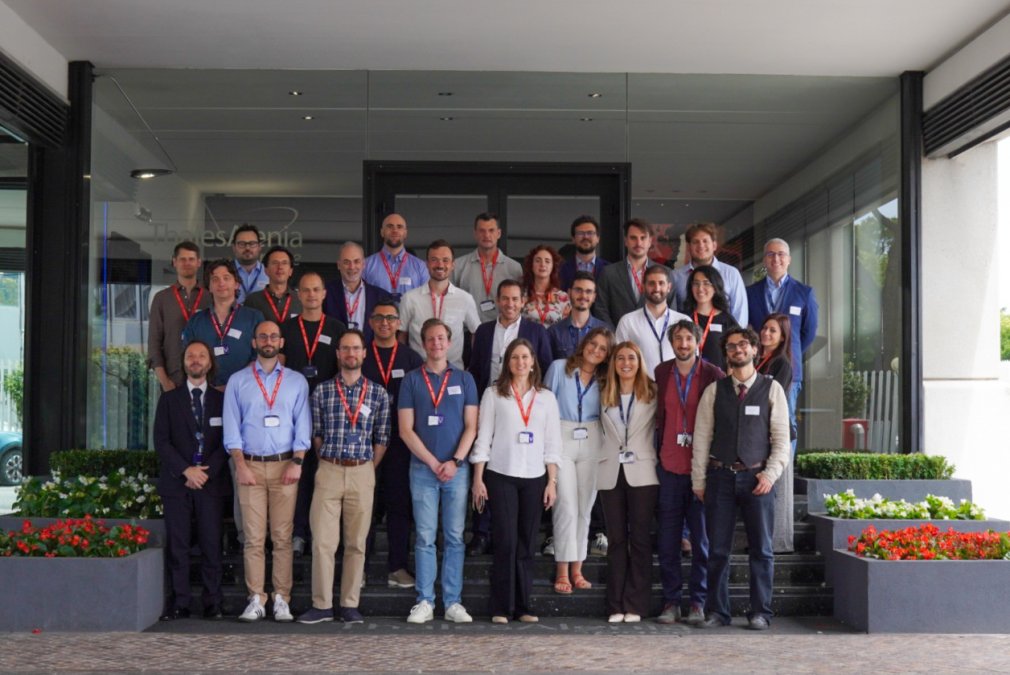
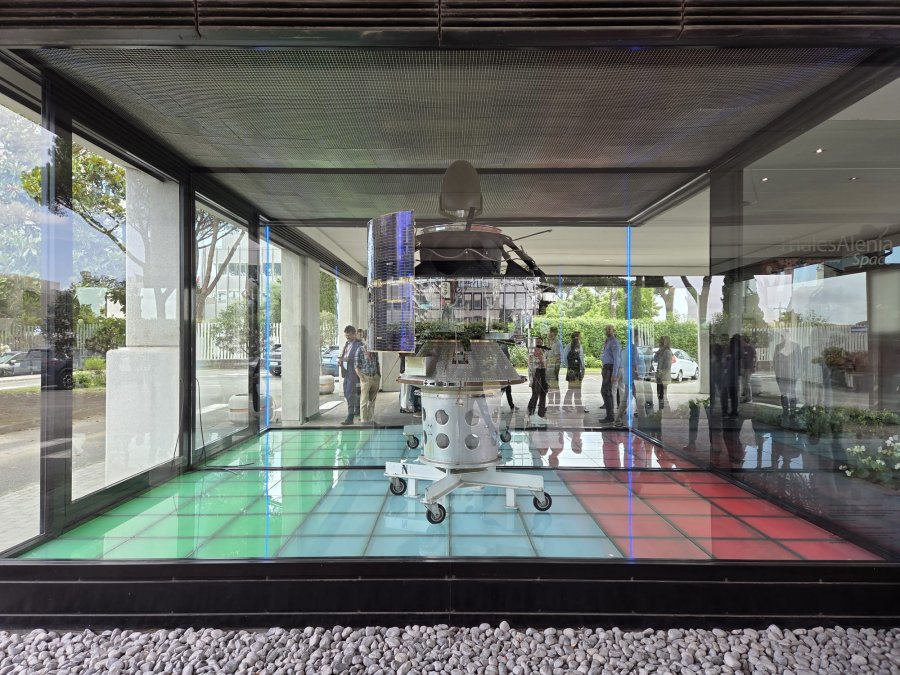
The PASQuanS2.1 consortium held its annual Industry Workshop, "Applications of Quantum Simulation 4," on 11 and 12 June 2026, hosted by Thales Alenia Space in Rome. The event brought together consortium scientists, technology developers, and industry stakeholders to exchange ideas and explore use cases in quantum simulation, with presentations from startups and end users across the community.
The workshop showcased how the European quantum ecosystem continues to mature, bringing together leading academic groups, quantum technology companies, industrial enablers, and end users to accelerate the transition from laboratory demonstrations to practical applications.
A recurring theme throughout the event was the rapid progress of neutral-atom quantum computing and quantum simulation platforms. Speakers presented advances in hardware scalability, control, and programmability, demonstrating how these technologies are steadily expanding the range of problems that can be tackled using quantum approaches.
Several industrial use cases illustrated the potential of quantum technologies across multiple sectors. Examples included:
- Materials science and quantum chemistry, with new efforts to simulate strongly correlated materials and investigate properties that remain difficult to access using conventional computational methods.
- Optimization challenges in energy, telecommunications, logistics, and finance, where hybrid quantum-classical workflows are being explored to complement existing state-of-the-art approaches.
- Aerospace and Earth observation applications, including satellite mission planning, climate modelling, orbital determination, and analysis of Earth observation data.
- Machine learning and artificial intelligence, where quantum-enhanced techniques are being investigated for classification, prediction, and data analysis tasks.
The workshop also highlighted the importance of benchmarking and validation. Participants emphasized the need for rigorous comparisons between quantum and classical methods to identify the most promising application areas and to establish meaningful performance metrics as quantum hardware continues to evolve.
A strong focus was placed on collaboration between hardware developers and end users. Discussions showed how practical industrial challenges are helping shape future hardware and software development, while advances in quantum technologies are opening new opportunities for innovation across sectors.
As the PASQuanS2.1 project continues, the workshop reinforced the importance of maintaining close dialogue between researchers, technology providers, and industry. The continued development of programmable atomic quantum simulators, combined with growing industrial engagement, is helping position Europe at the forefront of quantum simulation and quantum computing innovation.
The PASQuanS2.1 consortium thanks all speakers, participants, and hosts, including Thales Alenia Space, for contributing to a successful event.